


Hello:
Here are my conflict resolutions for 2021. I have repeated many from last year because, yet again, I still haven’t got them quite right.
- This year I will celebrate our differences.
- This year I will remain mindful that we all have lots of room in our hearts to love more and to love deeply.
- This year I will cherish my family and my friends and colleagues even more and continue to tell them how much they mean to me.
- This year I will listen with more curiosity, with more empathy, with more kindness and with more love.
- This year I will approach conflicts authentically and with humility and thoughtfulness.
- This year I will be true to myself and honour that others strive to be true to themselves, too.
- This year I will not judge, and I will be kinder to myself and others.
- This year I will be grateful to those who teach me important lessons by, for instance, letting me know when I am not interacting with compassion and grace.
- This year I will reach out more to those in need and remember we are all in the same storm, but we are not all in the same boat.
- This year I will do more to build peace – one person at a time.
What are your conflict resolutions for this year?
Warmest regards to you and yours and may your 2021 be full of joy and peace.
#conflictcoaching
#conflictmanagementcoaching
#conflict
#conflictmanagement
#conflictresolution
#resolutions
#ADR
 There are times many of us interact in ways we’re not very proud of. It may be because we are reacting to what someone is saying or doing. It may be because we aren’t getting our way on something we wanted to have happen. It may be because we are hurt, angry, feeling betrayed, jealous, disappointed, trying to assert ourselves, getting pushback on something important to us that we value, and so on.
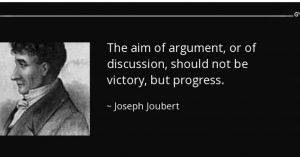 It seems that sometimes when we begin to have an argument with someone the focus isn’t on moving things forward. We might find ourselves getting stuck in blame, spending time asserting our perspective, disagreeing on the ‘right’ outcome, becoming angrier and resentful, and demonstrating other destructive reactions that keep us from progressing in constructive ways.
