“It’s impossible,” said fear.
“It’s risky,” said experience.
“It’s pointless,” said reason.
“Give it a try,” whispered the heart.
The above quote (not attributed to an author) caught my attention for several reasons and one of those is that the first three are common sentiments expressed by many of my conflict management coaching clients. With increased awareness, confidence, and conflict competence gained through coaching clients’ shifts are often towards determining and acting on some ways to get in touch with their self-limiting beliefs to be able to mend the broken relationship and mend their pain (these two results are not always one and the same). When the shift occurs it is evident that the shift is typically from the heart rather than from the range of reasons that have till then precluded ‘heartfelt action’.
When I hear the statement – “It’s impossible” – many people involved in an interpersonal dispute automatically go to a place of fear about how to proceed. They might say, ‘I know them – it just isn’t going to work’; ‘what if they reject me even more?’ and ‘what if they won’t accept my apology?’ These and other phrases and questions not only reflect fundamental fear about being rejected (which often has deep roots). They also reflect the next point – “It’s risky” – which is similarly experienced based. Certainly, previous trauma and other situations from our pasts form the foundation that precludes action and making decisions when the situation brings up scary and threatening histories. Other reasons based on our past experiences with this person or with others regarding interpersonal disputes results in us thinking it’s risky to try again leading to – “It’s pointless”. This is commonly heard when clients feel hopeless, bereft, and full of doubt that anything can be salvaged, or that their attempts to try could be successful. Many who say this are trying to be practical rather than put themselves through more grief.
The reasons stated here and many more contribute to the hesitance many of us feel about the thought of trying to make amends or even finding a way to re-engage persons with whom we are in dispute – whether to bridge the schism or to speak our truth which might not necessarily do so.
“Give it a try” the last point in the quote though is very often what our hearts really want to do. It’s the “whisper” that is there – that doesn’t speak louder until we are ready – if we have some hope to be heard, to make amends, to let go and so on. When the pain from the conflict is deep, it is of course, harder to act and therefore, more difficult to consider attempts at reconciliation or otherwise confronting the other person’s bad behaviour. Such attempts seem too “impossible”, “risky”, and “pointless”. And underneath the hesitancy to see how to make amends or speak out we likely know, at some level of our consciousness, that our fears, past experiences, and reason are drowning out the whisper – and we are missing an opportunity to find some peace.
This week’s Conflict Mastery Quest(ions) blog invites you to see if you can find yourself in the three sentences of the quote above and consider what your heart is whispering.
- What situation do you have in mind when thinking about a conflict that you are hesitant to act on?
- What is your heart feeling and whispering to you right now about this conflict?
- What makes acting on this situation (making amends, speaking out etc.) impossible?
- What are the underlying fears about acting on the situation?
- What’s risky about acting on the situation?
- Which of your life experiences is talking here?
- What reasons might it be pointless to act on this situation from your perspective?
- What is the impact on you when you consider reconciling your differences with the other person (if you want to) or, otherwise giving voice to your experience – the not yet spoken words?
- What is your heart whispering to you now as you consider various things here (same as above or if different, how so)?
- What do you really want to say to the other person if you were to feel/believe you have whatever takes to act on what your heart is now whispering? What do you think it will take?
- What else occurs to you as you consider these questions?
- What insights do you have now that you didn’t have before you answered these questions?


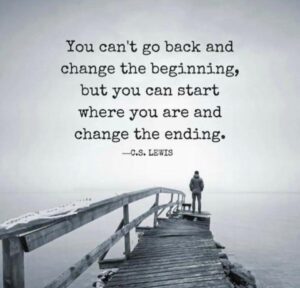 This quote applies to just about everything I guess 😊 And, it is used here in our conversation today as it relates to interpersonal conflict.
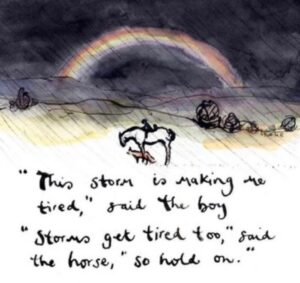 In a wonderful book entitled The Boy, the Mole, the Fox and the Horse by Charlie Mackesy, there are many quotes in it that touch me. One of them shows a boy on a horse and he clearly looks beleaguered. He says “This storm is making me tired”, to which the horse replies “Storms get tired too. So, hold on”. And this week’s Conflict Master Quest(ions) blog considers the storms we experience when we are in conflict and what that feels like.